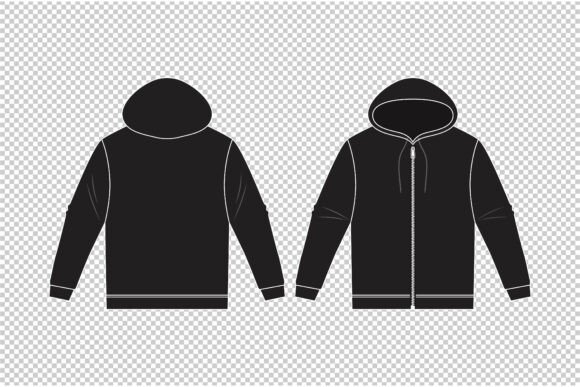
Zip Hoodie Front and Back Vector
A Designer’s First Look: Clean, Calm, and Commercially Smart
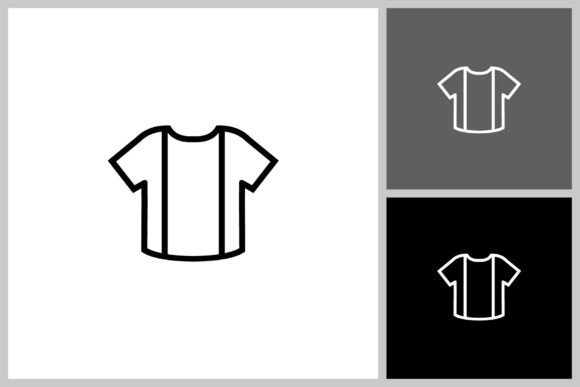
When I opened Zip Hoodie Front and Back Vector, my first thought wasn’t “pretty”—it was “usable.” That’s rare. This isn’t a flashy, over-detailed illustration meant for social media scrolling. It’s a quiet, confident vector—black, minimalist, and built with intention. The front view centers cleanly on the zipper pull and chest space; the back gives breathing room across the shoulders and upper back. No clutter, no forced trends. Just shape, proportion, and presence. As someone who regularly translates digital designs into stitched reality—whether for a boutique sweatshirt line or a custom baby onesie—I immediately saw how this could serve real projects without fighting the fabric.
Where It Lives Best: Real Projects, Not Just Mockups
Last week, I used Zip Hoodie Front and Back Vector to prep a client pitch for a small-batch embroidered hoodie line targeting local coffee shops. We needed clean, scalable branding assets—not just logos, but presentation-ready visuals that showed how embroidery would sit *on* the garment. This vector delivered exactly that. Its balanced negative space made it easy to drop in stitch previews, test thread color palettes, and simulate placement on both light and dark fabrics. I’ve also repurposed it for an Etsy seller’s digital embroidery file listing: layered over a soft gray sweatshirt mockup, it gave buyers instant confidence in scale and proportion before downloading their machine embroidery design.
It shines especially well for products where clarity > complexity: embroidered patches (great for clean edge definition), tote bag designs (the front view anchors nicely at the center), aprons (back view helps visualize logo placement across the shoulders), and even nursery decor like pillow covers—where minimalism reads as intentional, not underdeveloped.
What to Watch For: When Simplicity Needs Extra Care
Don’t mistake minimalism for low-maintenance. Because Zip Hoodie Front and Back Vector relies on strong silhouettes and clean lines, small execution flaws become highly visible. On stretchy fabric like cotton-blend sweatshirts, I recommend testing the design with medium-weight cutaway stabilizer—especially around the zipper area, where tension can distort fine outlines. Thin fabrics? Add a tear-away layer underneath to prevent shadowing from dense fill stitch areas.
Curved surfaces—like caps or structured baby beanies—require extra attention. The front view’s centered composition works beautifully on flat panels, but when wrapped around a crown, subtle adjustments to vertical alignment may be needed. And if you’re planning holiday embroidery—say, stitching this onto a cozy fleece-lined blanket—the back view’s open shoulder space is perfect for adding a small monogram or date, but avoid placing tiny lettering near the neckline seam unless you’ve verified hoop size clearance.
Stitching Clarity & Customer Trust Go Hand-in-Hand
Here’s what matters most to my clients—and to my own craft business: when a customer sees a finished product, they should instantly recognize the care behind it. Zip Hoodie Front and Back Vector supports that. Its generous margins and uncluttered layout give embroidery machines room to breathe. There’s no risk of satin stitch bleeding into adjacent elements, no tight corners where running stitch might skip. That means fewer re-hoops, less thread breakage, and more consistent results across batches—critical whether you’re fulfilling 5 personalized gifts or 50 small shop products.
I’ve noticed customers respond differently to pieces built from intentional design assets like this one. A handmade product using Zip Hoodie Front and Back Vector feels considered—not just stitched, but *curated*. That perception lifts perceived value, builds brand consistency, and makes items feel gift-ready, even without fancy packaging.
Practical Notes Every Embroidery Designer Should Run Through
- Test first: Stitch Zip Hoodie Front and Back Vector on scrap fabric matching your final project’s weight and stretch.
- Check contrast: Preview thread colors against both light and dark fabric backgrounds—especially important for black-on-black or white-on-cream applications.
- Review stitch density: Even minimalist vectors can hide dense fill areas; zoom in to confirm no over-stitching in collar or cuff zones.
- Confirm hoop compatibility: Measure the vector’s largest dimension against your most-used hoop size—don’t assume it fits standard 4x4 without checking.
- Inspect small details: Zoom in on zipper teeth, pocket edges, and hemlines—these are often simplified in vectors, but need to translate cleanly to satin or fill stitch.
- Mock it in grayscale: View a black-and-white version to assess tonal balance before committing to thread colors.
- Verify licensing: Since this falls under Graphics and Hoodies Sweatshirts, confirm whether your intended use—commercial embroidery, digital resale, or bundled printable mockups—is covered.
Final Thought: A Quiet Asset With Real Reach
Zip Hoodie Front and Back Vector won’t shout. But it listens—closely—to what your embroidery project actually needs: structure, scalability, and silent professionalism. It’s the kind of design asset that disappears into your workflow while lifting everything around it. Whether you’re an Etsy seller building trust through polished listings, a craft business owner prepping holiday embroidery bundles, or a designer sourcing reliable design assets for client presentations—it earns its place not through flash, but through function. And in the world of handmade product and custom apparel, that’s the highest compliment you can give a vector.